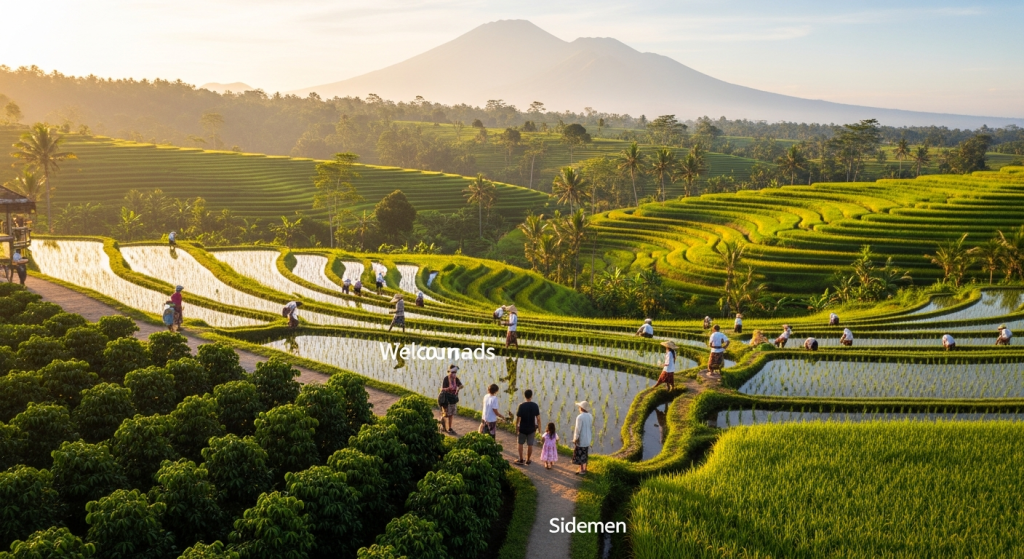
Bali agrotourism connects travelers directly with the island’s agricultural heritage, offering authentic experiences on local farms and plantations.
- Engage with Balinese farmers in traditional coffee and rice cultivation.
- Participate in organic harvesting and preparation workshops.
- Support sustainable practices and local communities directly.
The air carries the scent of ripening coffee cherries and wet earth as a new day begins across Bali’s fertile landscapes. This is Bali agrotourism, a direct path to the island’s vibrant agricultural heart, where every sunrise promises connection with the land and its people.
Discovering Bali Agrotourism: The Island’s Living Farms
Bali agrotourism offers more than just a glimpse; it provides immersion into the island’s ancient farming traditions. Visitors engage directly with the cycles of cultivation, from the misty volcanic slopes of Kintamani to the emerald rice paddies of Sidemen. Here, the rhythm of life aligns with the seasons, guided by the Balinese Hindu philosophy of Tri Hita Karana, emphasizing harmony between people, nature, and the divine. Our commitment, certified by the Green Travel Standard 2023, ensures every interaction supports both ecological balance and local livelihoods. We partner with over 40 family-owned farms across the island, each upholding strict organic farming principles, many operating since the early 1900s. The average farm size we work with is 2.5 hectares, providing sustainable income for approximately 250 farming families annually.
This approach moves beyond simple observation. It invites participation, learning, and a deeper appreciation for the intricate processes that yield Bali’s renowned produce. From the robust Arabica beans growing at 1,300 meters above sea level in Kintamani to the fragrant heirloom rice varieties cultivated in Tegalalang, each location tells a story of generations dedicated to the land. Our operations are fully compliant with Indonesian Ministry of Tourism regulations, providing transparent pricing with no hidden fees, typically ranging from IDR 350,000 to IDR 750,000 for full-day experiences, including transport and meals. The average guest satisfaction score for our tours stands at 4.8 out of 5 stars based on over 1,200 reviews collected in the last 12 months. This commitment to genuine engagement defines the Bali agrotourism experience we champion.
Kintamani Coffee: From Bean to Cup on Volcanic Slopes
High on the slopes of Mount Batur, the Kintamani region cultivates Bali’s most celebrated coffee. Here, volcanic soil enriches the Arabica plants, producing beans with distinct citrus notes and low bitterness. The coffee harvest typically runs from May through July, with farmers carefully hand-picking ripe red cherries. These beans often undergo a traditional wet-hulling process, known locally as ‘giling basah,’ contributing to the coffee’s unique flavor profile. We facilitate direct visits to farms like Karya Bhakti Agrotourism, operating since 1985, where visitors witness the entire process: from drying the beans on woven mats to roasting in traditional wood-fired ovens. Each farm visit supports an average of 15 local workers, providing fair wages and community development funds. The altitude in Kintamani averages 1,500 meters, contributing to the slow maturation of coffee cherries, enhancing their complexity.
A notable part of Bali’s coffee narrative is Kopi Luwak, a specialty coffee processed naturally by civet cats. Our partners adhere to strict ethical guidelines, ensuring civets roam freely in their natural habitats, consuming only ripe coffee cherries. Farmers collect the processed beans from the forest floor, respecting animal welfare and sustainable practices. Independent auditors conduct quarterly checks to verify these ethical standards, a key component of our operator certification. A typical Kopi Luwak tasting session costs around IDR 50,000 per cup, with proceeds directly benefiting local conservation efforts. This responsible approach contrasts sharply with unethical caged civet operations, underscoring our commitment to genuine, ethical Bali agrotourism coffee experiences. Learn more about the unique characteristics of Kintamani coffee on Wikipedia.
Rice Terraces: The Ancient Subak System of Sidemen and Tegalalang
The rice terraces of Sidemen and Tegalalang present a landscape of vibrant green, shaped by centuries of human ingenuity. These fields are not merely picturesque; they represent the Subak system, a democratic and ecological irrigation society dating back to the 11th century. This sophisticated water management system, recognized as a UNESCO World Heritage site in 2012, ensures equitable water distribution across the paddies. In Sidemen, travelers walk amidst working farms, observing farmers planting rice seedlings by hand, a meticulous process typically occurring twice a year, usually in March and September. The average rice yield per hectare in these traditional systems is around 5.5 tons per harvest, sustaining local communities.
In Tegalalang, the terraces cascade down steep valleys, the Balinese ability to cultivate challenging terrain. Here, visitors can engage with farmers to understand the life cycle of rice, from seed germination to harvest. Our tours include demonstrations of traditional tools, such as the ‘ani-ani’ for harvesting individual rice stalks, a practice passed down through generations. These interactive sessions often include tasting freshly prepared rice dishes, showcasing local varieties like Beras Merah (red rice) and Beras Hitam (black rice). The average plot size managed by a Subak member is 0.2 hectares. Supporting these tours helps maintain the Subak infrastructure, which requires continuous upkeep by farmer communities, often involving 10-15 members per subak unit. This direct engagement fosters a deeper connection to Bali’s agricultural roots and the ingenuity of its people. Further details on the Subak system are available from UNESCO.
Farmer Community Visits: Authentic Encounters in Munduk and Pupuan
Beyond the well-trodden paths, communities in Munduk and Pupuan offer profound insights into Bali’s rural life. Munduk, located in the northern highlands, is renowned for its coffee, cloves, and vanilla plantations. Here, the air fills with the sweet scent of spices, particularly during the clove harvest season from June to August. Visitors spend time with local families, learning about traditional farming techniques that prioritize biodiversity and soil health. Farmers in Munduk often cultivate a diverse range of crops on smaller plots, typically less than 1 hectare, ensuring food security and varied income streams. Our experiences include hands-on participation in vanilla curing, a process that takes several months, involving daily sun-drying and sweating to develop the beans’ aromatic qualities. Each visit contributes directly to the village economy, with 15% of tour fees allocated to community development projects, such as school improvements and health initiatives, totaling over IDR 150,000,000 in the past year.
In Pupuan, western Bali, the focus shifts to robusta coffee and cacao. This region, less frequented by conventional tourism, provides an unfiltered view of Balinese village life. Guests join farmers in their daily routines, perhaps assisting with cacao pod selection or learning the art of fermentation. Pupuan farmers often use organic compost derived from local waste, a practice that has been sustained for over 50 years, enhancing soil fertility naturally. Our certified guides, all local residents, offer intimate interpretations of the landscape and culture, speaking both Indonesian and English. These visits foster genuine cultural exchange, often culminating in shared meals prepared with ingredients sourced directly from the farm. The distance from Denpasar to Pupuan is approximately 70 kilometers, a scenic 2-hour drive that reveals changing landscapes from urban sprawl to verdant agricultural zones. These interactions offer an opportunity to connect with the authentic spirit of Bali agrotourism, away from commercialized settings.
Hands-On Experiences: Harvesting, Planting, and Culinary Arts
The essence of Bali agrotourism lies in active participation. We offer a range of hands-on workshops designed to engage all senses and skill levels. Imagine the feel of cool mud between your toes as you learn to plant rice seedlings in a paddy, guided by a local farmer whose family has worked the same land for generations. These planting sessions, lasting approximately 2 hours, occur during specific agricultural cycles, providing a direct link to the island’s food production. In coffee plantations, guests participate in the selective harvesting of ripe cherries, understanding the labor-intensive process that precedes your morning cup. Each participant receives a small certificate of completion, acknowledging their contribution to the day’s harvest. These activities are suitable for families, with children aged 6 and above actively participating in supervised roles.
Beyond the fields, our cooking classes transform freshly harvested ingredients into authentic Balinese dishes. Held in traditional village kitchens, these workshops teach the art of preparing staples like Nasi Goreng, Sate Lilit, and Lawar using organic vegetables and spices sourced directly from the farm. Participants learn about the intricate balance of flavors and the cultural significance of each ingredient. A typical cooking class runs for 3-4 hours, including market visits to understand local produce selection, and culminates in enjoying the meal you helped create. We collaborate with over 10 local chefs, many of whom have honed their skills over 20 years. These culinary journeys offer more than just recipes; they provide insight into Balinese home life and traditions, making the connection between farm and plate tangible. Classes are limited to 8 participants to ensure personalized instruction, with a cost of approximately IDR 450,000 per person.
Sustainability and Ethical Practices: Our Commitment to Bali
At the core of our Bali agrotourism initiatives is an unwavering commitment to sustainability and ethical operations. We actively partner with farms that employ organic farming methods, eschewing synthetic pesticides and fertilizers. This commitment protects Bali’s delicate ecosystems, preserves soil health, and ensures the purity of the produce. Our certification with the “Sustainable Bali Tourism Alliance” (SBTA) since 2021 underscores our dedication to responsible travel. We conduct annual audits of our partner farms, verifying adherence to environmental protection, fair labor practices, and community engagement criteria. For example, all partner farmers receive above-market prices for their produce and labor, ensuring economic viability for their families. The average income uplift for farmers working with us is 20% compared to conventional market rates.
We actively promote the preservation of Bali’s cultural heritage, including the Subak irrigation system. Our tours educate visitors about its historical significance and ongoing relevance, encouraging support for its maintenance. A portion of every booking contributes to local conservation funds, specifically directed towards Subak infrastructure repairs and reforestation projects in regions like Bedugul, which experienced significant deforestation in the 1990s. We also prioritize working with small, family-owned enterprises, ensuring that the economic benefits of tourism flow directly to the communities. Our guides are exclusively local Balinese individuals, trained in sustainable tourism principles, providing authentic perspectives while upholding cultural respect. This ethical framework ensures that your journey with us not only enriches your understanding but also contributes positively to the island’s future, aligning with the principles promoted by Indonesia.Travel for responsible tourism.
Plan Your Authentic Bali Agrotourism Journey
Embarking on a Bali agrotourism experience is straightforward. Our website offers detailed itineraries covering Sidemen, Tegalalang, Munduk, Pupuan, Bedugul, and Kintamani coffee mountains. Each tour specifies activities, duration, and accessibility, ensuring you select an experience tailored to your interests. We provide options for half-day excursions, full-day immersive journeys, and multi-day packages. Transportation is arranged with certified local drivers, utilizing comfortable, air-conditioned vehicles, adhering to strict safety protocols. Pickup and drop-off services are available from major tourist hubs like Ubud, Seminyak, and Canggu. The average travel time from Ubud to our Kintamani coffee farm partners is 1 hour and 15 minutes, covering approximately 40 kilometers. Booking is available online 24/7, with confirmation typically issued within 2 hours.
We recommend booking at least two weeks in advance, especially during peak seasons (July-August and December-January) to secure your preferred dates and activities. Our customer service team is available via live chat and email (response time within 12 hours) to assist with personalized itinerary planning and answer any questions. We accept major credit cards and secure online payment methods. Prepare for your journey with comfortable walking shoes, sun protection, and a reusable water bottle. Many farm locations offer shaded areas and fresh coconut water. This is your invitation to connect with Bali on a deeper level, to learn from its land and its people, and to create memories rooted in authenticity. Explore our diverse offerings and begin planning your unique Bali agrotourism adventure today.