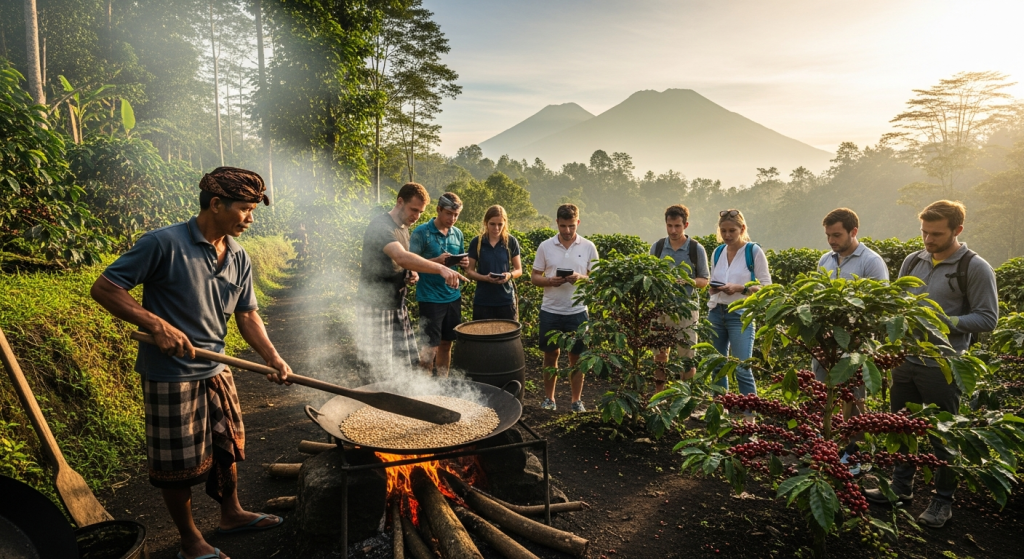
- Direct engagement with Balinese farmers and their daily life.
- Learning about the Subak irrigation system, a UNESCO World Heritage site.
- Opportunities to harvest organic produce and participate in traditional cooking.
The morning sun warms the rice paddies, casting long shadows as farmers begin their work. A faint aroma of Kintamani coffee drifts from a nearby plantation. Bali agrotourism offers a direct connection to this vibrant agricultural heart, moving beyond coastal vistas to the island’s green interior.
Understanding Bali Agrotourism: Beyond the Scenery
Bali agrotourism represents a conscious choice to engage with the island’s foundational industries: agriculture and sustainable land management. It focuses on authentic, educational encounters with Balinese farming life, providing direct insight into the cultivation of staple crops and spices. This sector promotes economic diversification for rural communities, offering an alternative revenue stream that complements traditional farming income. For instance, a small coffee farm in Munduk, typically less than 0.5 hectares, can host visitors for tasting sessions and provide an additional 15% to 20% income annually through these activities. Operators prioritize ethical practices, often seeking certifications like the Indonesian Organic Standard (SNI 6729:2016) for their produce, ensuring ecological integrity. This commitment extends to fair wages for local farmers and transparent business models. Guests learn about the intricate balance of the ecosystem, from soil health to water conservation, understanding that every plant contributes to the island’s vitality. The typical agrotourism visit lasts between 2 to 4 hours, offering hands-on activities that range from planting rice seedlings to grinding spices. The sector’s growth reflects a global trend towards responsible travel, where visitors seek meaningful interactions over passive observation. It is a vital component of Bali’s sustainable tourism strategy, aiming to preserve cultural landscapes and empower local populations. A significant portion of these initiatives are farmer-owned, providing direct benefits to the families involved rather than external corporations. This direct community engagement distinguishes genuine agrotourism from mere agricultural sightseeing.
The Ritual of Rice: Cultivation and Community in Bali
The rhythmic sound of water flowing through ancient channels signals the lifeblood of Bali’s agricultural landscape: rice. The Subak irrigation system, a democratic and spiritual cooperative, has managed water distribution across the island for over a thousand years, earning recognition as a UNESCO World Heritage site in 2012. Visitors to regions like Tegalalang and Sidemen witness this intricate system firsthand. Rice cultivation here is a 120- to 140-day cycle, beginning with the meticulous preparation of terraces, followed by the delicate planting of seedlings by hand. Farmers often work in groups, sharing labor and knowledge passed down through generations. A typical rice paddy, often less than 0.25 hectares, requires continuous care, from pest management to maintaining water levels. The harvesting process, usually involving sickles, is a communal event, often accompanied by traditional ceremonies. These ceremonies, or Mendak Toya, give thanks to Dewi Sri, the goddess of rice and fertility. Learning about the Subak provides profound insight into Balinese philosophy, particularly the concept of Tri Hita Karana—harmony between humans, nature, and the divine. Agrotourism experiences allow guests to participate in planting or harvesting, feeling the cool mud between their toes, directly engaging with the earth. This connection fosters a deeper appreciation for the staple food that feeds millions across Indonesia. The average yield for Balinese rice paddies stands at approximately 5-6 tons per hectare per harvest, the effectiveness of traditional methods combined with sustainable practices. These experiences offer more than observation; they offer participation in a living cultural tradition.
Bali’s Coffee Culture: From Bean to Cup Experiences
Bali’s volcanic soils and high altitudes create ideal conditions for cultivating exceptional coffee, particularly in the Kintamani highlands. Kintamani coffee, primarily an Arabica varietal, thrives at elevations exceeding 900 meters above sea level, contributing to its distinct citrusy notes and bright acidity. The traditional processing method, known as the wet method or “giling basah,” involves hulling the beans while they are still moist, resulting in a unique flavor profile. Coffee cherries ripen over an 8- to 9-month period, typically harvested between May and October. Agrotourism sites in Kintamani and Munduk offer comprehensive tours detailing this journey from cherry to cup. Guests walk through plantations, learning about different coffee plants, including Robusta, which grows at lower elevations. A key element of many tours involves the controversial yet renowned Luwak coffee. Ethical operators ensure that their civets are free-roaming or kept in spacious, natural enclosures, adhering to strict animal welfare guidelines. Reputable farms display certifications or transparent practices to confirm their ethical sourcing. Visitors learn to distinguish ethically produced Luwak coffee, often verified by independent auditors. The experience includes roasting demonstrations and tasting sessions, where various Balinese coffees, alongside herbal teas and spices, are presented. A typical tasting offers 8-10 different beverages. The Kintamani region alone produces an estimated 1,500 tons of green coffee beans annually, supporting thousands of local farmers. These experiences provide not just a tasting, but an education in the intricate art and science of coffee production, revealing the dedication required to produce each aromatic brew. The average price for a kilogram of ethically sourced Kintamani Arabica green beans is around IDR 70,000 to 90,000.
Farm-to-Table: Cooking Classes and Organic Harvests
The essence of Balinese cuisine lies in its freshness and vibrant flavors, directly sourced from the island’s fertile lands. Agrotourism offers an opportunity to connect with this culinary heritage through hands-on cooking classes and organic harvest experiences. Farms in regions like Pupuan and Bedugul specialize in cultivating a wide array of organic vegetables, fruits, and spices. Guests engage in the process of harvesting their own ingredients, learning about sustainable farming techniques such as crop rotation and natural pest control. Many farms adhere to permaculture principles, designing self-sustaining ecosystems that minimize waste and maximize biodiversity. A typical cooking class, often lasting 3 to 4 hours, begins with a visit to a local market or the farm’s own garden to select seasonal produce. Participants then learn to prepare traditional Balinese dishes like Nasi Goreng, Sate Lilit made with fresh fish or chicken, and Lawar, a complex vegetable salad. The average Balinese dish incorporates 8 to 12 distinct spices and herbs, creating a depth of flavor unique to the island. Instructors, often local women from the community, share family recipes and cultural insights, transforming a cooking lesson into a cultural exchange. These experiences support local economies by creating direct markets for farmers’ produce and providing employment for community members. Participants leave with new culinary skills and a deeper understanding of the island’s food culture, appreciating the journey of ingredients from soil to plate. The average cost for a Balinese cooking class ranges from IDR 350,000 to 700,000 per person, often including a meal and recipe booklet.
Choosing Your Bali Agrotourism Experience: A Responsible Framework
Selecting an agrotourism operator in Bali requires a discerning approach, focusing on authenticity, ethical practices, and community benefit. A responsible framework prioritizes operators who demonstrate transparent operations and a genuine commitment to sustainability. Look for certifications such as the Indonesian Organic Standard (SNI 6729:2016) for produce, or local fair-trade labels that ensure equitable compensation for farmers. Questions to ask include: How much of the tour fee directly benefits the local farmers and community? Are the animals, if any, treated humanely? What sustainable practices are implemented on the farm, such as water conservation or waste management? Genuine agrotourism experiences focus on education and interaction, not merely observation. They integrate visitors into the daily routines of a working farm, offering opportunities for hands-on participation in planting, harvesting, or food preparation. Avoid operations that feel overly commercialized or lack clear information about their community impact. Reputable operators often partner directly with local cooperatives or Subak organizations, ensuring a significant portion of revenue returns to the agricultural community. For example, some programs guarantee that 60% of the tour fee directly supports the farming families involved. Planning your visit during off-peak seasons, typically April-May or September-October, can provide a more intimate experience and further support year-round economic stability for local farmers. Always check reviews and seek recommendations from trusted sources or local tourism boards. Prioritizing ethical operators ensures your visit contributes positively to Bali’s environment and its people. This conscious choice reinforces the sustainable future of agrotourism on the island.
Regional Highlights: Sidemen, Tegalalang, Munduk, and Beyond
Bali’s diverse topography offers distinct agrotourism experiences across its regions. Sidemen, located approximately 40 kilometers east of Denpasar, presents a tranquil landscape of emerald rice terraces and traditional village life. Here, visitors can participate in rice planting or harvesting, learning directly from farmers about the Subak system in an unhurried setting. The area maintains a traditional Balinese rhythm, far from the coastal crowds. Tegalalang, renowned for its iconic rice terraces, offers more accessible views and artisan craft shops, often incorporating rice paddy walks into their experiences. While more frequented, ethical operators here still provide valuable insights into rice cultivation. Munduk, in northern Bali, sits at an elevation of around 900 meters, offering a cooler climate ideal for coffee and spice plantations. Tours here focus on coffee processing, vanilla, cloves, and cacao cultivation, often including treks through lush forests to waterfalls. Pupuan, located in the Tabanan regency, is a significant agricultural hub known for its robust coffee production and extensive fruit orchards, including mangosteens and durians. Bedugul, another highland area in central Bali, specializes in temperate vegetables and fruits, with strawberry farms and botanical gardens providing diverse agricultural insights. Kintamani, overlooking Mount Batur at 1,717 meters, is the heartland of Bali’s Arabica coffee, offering dramatic volcanic scenery alongside coffee plantation visits. Each region provides a unique agricultural narrative, from the volcanic soils of Kintamani that enrich coffee beans to the ancient irrigation systems of Sidemen. Exploring these areas offers a comprehensive understanding of Bali’s rich and varied agricultural traditions.
Your journey into Bali’s agricultural heartland awaits. Discover the rhythms of the land, connect with the island’s dedicated farmers, and taste the authentic flavors cultivated with care. Explore more about how you can participate in sustainable farm experiences and support local communities by visiting baliagrotourism.com. Plan your responsible farm-to-table adventure or learn about our certified ethical operators today. Begin your authentic Balinese connection at baliagrotourism.com and explore our guide on choosing ethical Luwak coffee.