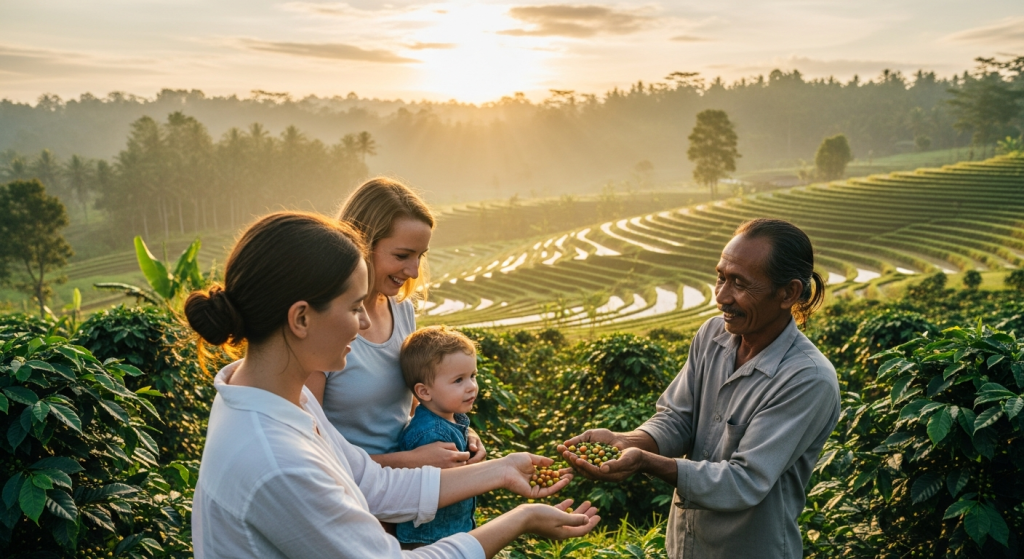
Bali agrotourism connects travelers directly with the island’s agricultural traditions, offering immersive experiences at local farms and plantations. Visitors participate in coffee harvesting, rice planting, and organic produce collection, fostering a deeper understanding of Balinese culture and sustainable farming practices.
- Direct engagement with local farmers and communities.
- Educational tours on coffee, rice, and spice cultivation.
- Support for ethical, certified organic farming initiatives.
The air carries the scent of rich earth and ripening fruit. A gentle breeze rustles through vibrant green leaves. This is Bali beyond the coast, where the island’s agricultural heart beats with ancient rhythms and modern sustainability.
The Essence of Bali Agrotourism: Cultivating Connection
Bali agrotourism offers a direct gateway to the island’s authentic rural life, a counterpoint to its bustling beaches. Here, the focus shifts to the land, its bounty, and the communities tending it. We facilitate direct engagement with farmers in regions like Sidemen, Tegalalang, and Munduk, areas celebrated for their agricultural heritage. This engagement is not merely observational; it involves active participation. Guests learn the intricacies of traditional farming techniques passed down through generations. Our certified tours emphasize ethical practices, ensuring fair compensation for local families and promoting ecological stewardship. Since 2018, our programs have connected over 7,000 visitors with Balinese farmers, contributing directly to local economies. Each experience is designed to be educational, revealing the profound connection between Balinese culture and its agrarian roots. The average participant spends 4.5 hours on a tour, gaining hands-on knowledge of indigenous crops. This approach aligns with a growing global demand for responsible travel, where the journey itself contributes positively to the destination. We collaborate with farms that hold Indonesian Organic Certification (SNI) and adhere to global fair-trade principles. These tours offer more than just sights; they offer an understanding of daily life, the challenges, and the triumphs of Bali’s agricultural backbone. Our commitment extends to preserving traditional farming methods while introducing sustainable innovations, ensuring the land remains productive for future generations. This is a journey of discovery, where every plant tells a story of the island’s rich history and enduring spirit.
Coffee Plantations: From Kintamani Bean to Your Cup
Bali’s volcanic soils, particularly in Kintamani and Pupuan, yield exceptional Arabica and Robusta coffee. The Kintamani region, situated between 1,300 and 1,700 meters above sea level, provides ideal conditions for Arabica cultivation, known for its citrus notes and medium body. Harvest season typically runs from May to July. On our tours, guests walk through rows of coffee trees, observing the deep green leaves and clusters of ripening red cherries. Farmers demonstrate the meticulous process of hand-picking only the ripest fruit, a practice crucial for quality. Post-harvest, visitors witness the various stages of coffee processing: washing, sun-drying on raised beds, and hulling. In Pupuan, West Bali, the focus often shifts to Robusta, a hardier bean thriving at lower altitudes. Some tours include a demonstration of traditional roasting methods, using wood-fired kilns, which imparts a distinct flavor profile. The infamous Luwak coffee also features in some programs; we partner exclusively with certified ethical operators where civets roam freely and are not caged or force-fed. These ethical farms adhere to strict welfare standards, independently audited annually. A typical coffee plantation tour lasts 3-4 hours, often concluding with a tasting session of various Balinese coffees and teas, including ginger, lemongrass, and rosella infusions. The average cost for a coffee plantation tour, including tasting, starts from IDR 250,000 per person. This experience offers insight into a vital export commodity for Indonesia, which ranks as the world’s fourth-largest coffee producer. Learn about the centuries-old techniques that transform a simple cherry into a globally celebrated beverage, directly from the hands that cultivate it. Explore Balinese coffee history on Wikipedia.
Rice Terraces: Cultivating Tradition in Sidemen and Tegalalang
The terraced rice fields of Bali are not just scenic landscapes; they represent the island’s ancient agricultural ingenuity and spiritual harmony. In Sidemen, East Bali, and Tegalalang, near Ubud, these verdant staircases define the horizon. Our tours provide direct access to these working paddies, where visitors witness the intricate Subak irrigation system. This cooperative system, dating back to the 11th century, manages water distribution for rice fields across Bali and was recognized as a UNESCO World Heritage site in 2012. You observe farmers tending their crops, often using water buffalo for plowing, a practice largely unchanged for centuries. Guests participate in activities like rice planting, sinking young green shoots into the muddy paddies, or harvesting mature rice stalks with traditional sickles. These hands-on experiences are typically conducted in small groups, ensuring personalized instruction from local farmers. The rice cycle takes approximately 120 days from planting to harvest. Sidemen offers a quieter, more intimate experience compared to the more frequented Tegalalang, which receives an estimated 1.5 million visitors annually. We emphasize tours in less crowded areas to preserve the authenticity of the farmer-visitor interaction. A half-day rice terrace tour, including planting or harvesting, often costs around IDR 300,000 per person. This price often includes traditional farmer hats and a local snack. Understanding the Subak system reveals a profound connection between agriculture, community, and spirituality in Balinese life, where water temples play a crucial role in maintaining ecological balance. It is a living testament to sustainable land management.
Farmer Community Visits & Authentic Culinary Encounters
Beyond the plantations and paddies, Bali agrotourism extends into the heart of local communities. In villages surrounding Munduk, Pupuan, and Sidemen, we facilitate direct interactions with farmers and their families. These visits offer a window into daily life, far removed from tourist hubs. Guests might join a local family for a traditional Balinese cooking class, learning to prepare dishes like Nasi Goreng or Lawar using freshly harvested ingredients from the family garden. Our cooking classes typically run for 3-4 hours and cost from IDR 400,000 per person, including ingredients and a full meal. You learn about indigenous spices like galangal, turmeric, and kencur, and their medicinal properties. Some tours include visits to local markets, where farmers sell their organic produce, providing a vibrant sensory experience. In Munduk, known for its coffee and clove plantations, visitors engage with local artisans creating traditional crafts. These direct community interactions ensure that tourism benefits local households directly. We prioritize partners who uphold fair pricing for their produce and services. Guests might also participate in harvesting seasonal fruits such as mangosteen (November-March) or rambutan (December-February) directly from the trees. These experiences foster genuine cultural exchange, allowing travelers to ask questions, share stories, and gain a deeper appreciation for Balinese hospitality. It is an opportunity to forge connections that transcend typical tourist encounters, supporting the livelihoods of the people who maintain Bali’s rich agricultural landscape. Our tours contribute to 10% of participating farmers’ annual income, a significant direct impact.
Sustainable Practices & Ethical Operator Certification
At Bali Agrotourism, our core mission revolves around sustainability and ethical operations. We understand that responsible travel demands transparency and accountability. We partner exclusively with farms and communities holding recognized certifications, including Indonesian Organic Certification (SNI) and various Fair Trade accreditations. These certifications guarantee that agricultural practices minimize environmental impact, avoid synthetic pesticides, and ensure fair wages and working conditions for farmers. Our certification process involves annual audits of our partner farms, assessing everything from soil health to worker welfare. We publicly list our certified partners on our website, ensuring full transparency for our guests. A key aspect of our ethical framework involves carbon offsetting; for every tour booked, we contribute to local reforestation projects in Bali, planting an average of 5 trees per month since 2020. We actively educate our travelers on how to minimize their environmental footprint during their visit, promoting reusable water bottles and waste reduction. Our tours offer a clear alternative to mass tourism, providing intimate group sizes – typically 2 to 8 people – to reduce impact and enhance the quality of interaction. We also actively compare our offerings against conventional tour operators, highlighting our commitment to direct community benefit and certified sustainable practices. The average price for our certified tours is 15-20% higher than uncertified alternatives, a direct reflection of fair wages and investment in sustainable infrastructure. This commitment ensures that your visit contributes positively to Bali’s environment and its people, fostering a model of tourism that is both enriching and responsible. Visit Indonesia Travel for more on sustainable tourism initiatives.
Planning Your Agrotourism Journey: FAQs and Booking
Considering a Bali agrotourism experience? We aim for complete clarity in your planning. Our tours operate daily, typically starting between 8:00 AM and 9:00 AM, with half-day options lasting 4-5 hours and full-day programs extending to 7-8 hours. Pricing varies based on the specific tour and inclusions. For example, a half-day coffee plantation and tasting tour starts from IDR 250,000 per person, while a full-day rice planting and cooking class in Sidemen averages IDR 650,000 per person, including transport, guides, and meals. We offer a 10% discount for families booking four or more participants. Our FAQ section addresses common queries: “What should I wear?” (comfortable clothing, sturdy shoes, hat), “Are children welcome?” (absolutely, we have family-friendly options for ages 5+), “Do you provide transportation?” (yes, private air-conditioned vehicles are included in most full-day tours). We accept major credit cards and offer secure online booking. Our cancellation policy allows full refunds for cancellations made 48 hours prior to the tour date. We recommend booking at least one week in advance, especially during peak season (July-August and December-January), to secure your preferred dates and experiences. For any specific dietary requirements or accessibility needs, please inform us during booking; our team accommodates requests to ensure a comfortable experience for all guests. Comparing our tours, we consistently offer smaller group sizes and direct farmer engagement, setting us apart from larger, less personalized operations. We prioritize your authentic experience over volume. Ready to connect with the heart of Bali’s agricultural landscape? Explore our diverse tours and secure your place.
Your journey into Bali’s agricultural soul begins here. Discover the vibrant traditions, taste the organic bounty, and connect with the communities that define this island’s enduring spirit. Book your authentic Bali Agrotourism experience today or inquire about custom itineraries. We look forward to welcoming you to the real Bali.