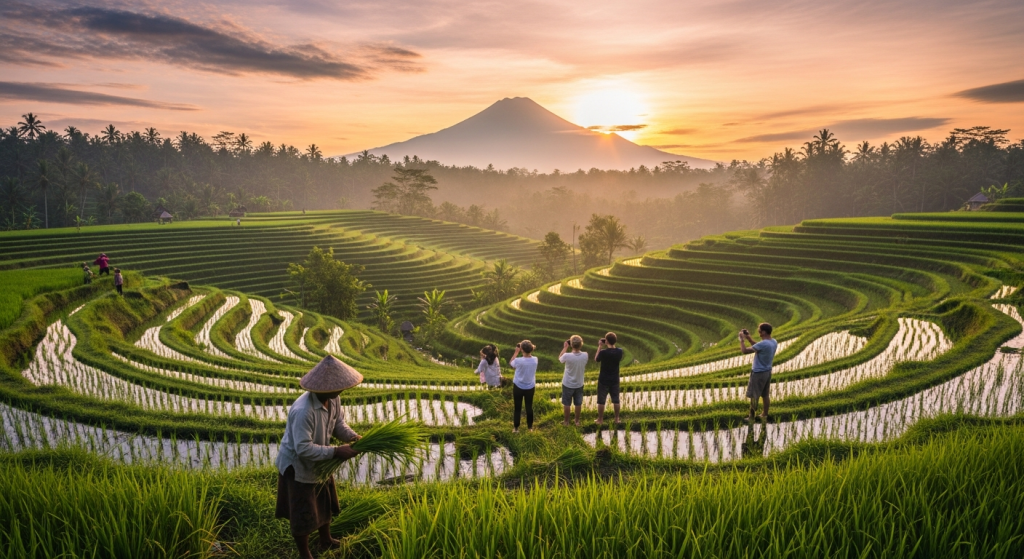
- Dry season (April-October) for coffee harvests and clear rice terrace views.
- Wet season (November-March) for fruit abundance and vibrant green landscapes.
- Shoulder months (April-May, September-October) offer balanced conditions.
The morning air in Bali carries the scent of damp earth and distant woodsmoke. Sunlight filters through palm fronds, illuminating the daily rhythm of the land. Understanding Bali’s seasons unlocks the truest experience of its agricultural heart, guiding you to the most authentic farm encounters.
The Rhythms of Rain and Sun: Bali’s Agricultural Calendar
Bali’s climate dictates the pace of its agricultural life, dividing the year into two primary periods: the dry season and the wet season. From April to October, the dry season brings lower humidity and abundant sunshine, with average daily temperatures hovering around 27°C on the coast and cooler, approximately 20°C, in the highlands. This period is often considered prime for outdoor activities, including extensive farm exploration and treks through verdant landscapes. The island receives an average of 90mm of rainfall per month during these drier months, ensuring comfortable conditions for walking through rice paddies or observing coffee bean drying processes. Conversely, the wet season, spanning from November to March, transforms the island into a vibrant canvas of intensified green. Rainfall can average 250mm per month, often manifesting as short, heavy afternoon showers that quickly give way to sunshine. While some travelers avoid this period, it presents a unique opportunity for `bali agrotourism`, showcasing the island’s incredible fertility and the resilience of its farming communities. Many fruit varieties reach their peak ripeness during these wetter months, and the rice fields pulse with new life. Local farmers, often working plots passed down through generations for over 200 years, adapt their schedules, demonstrating practices perfectly attuned to these climatic shifts. Understanding these cycles allows for a deeper appreciation of the island’s sustainable farming heritage.
Coffee Mountains Awake: Kintamani and Munduk Harvests
For those drawn to the aromatic world of coffee, the dry season aligns perfectly with the primary harvest windows in Bali’s volcanic highlands. In Kintamani, located on the slopes of Mount Batur at altitudes between 1,000 and 1,700 meters above sea level, Arabica coffee beans are typically harvested from July through September. This region, approximately 60 kilometers northeast of Denpasar, is globally recognized for its unique citrusy, floral Kintamani coffee, which received its Geographical Indication (GI) certification in 2008. Visitors arriving during these months observe farmers meticulously hand-picking ripe red cherries from coffee trees, often belonging to cooperative systems like the Subak Abian, an agricultural counterpart to the famed Subak water management system. Further west, in the cooler climes of Munduk and Pupuan, Robusta coffee varieties mature slightly earlier, with harvests generally running from May to July. Here, the process of sun-drying beans on large patios is a common sight, showcasing traditional methods that have remained largely unchanged for decades. A typical coffee plantation tour involves walking through the groves, learning about the ‘wet process’ or ‘dry process’ fermentation, and participating in roasting demonstrations. Many operators, like those certified by the Indonesian Coffee Association since 2015, offer tasting sessions, presenting up to 10 different coffee and tea varieties. For an in-depth understanding of Bali’s coffee culture, exploring its history and unique processing methods provides valuable context. Wikipedia offers further details on Balinese coffee traditions.
Emerald Fields of Plenty: Rice Cultivation in Sidemen and Tegalalang
The iconic rice terraces of Bali, particularly in regions like Sidemen and Tegalalang, offer dynamic agrotourism experiences throughout the year, dictated by the intricate cycles of rice cultivation. Bali’s rice farming operates under the UNESCO-recognized Subak system, a democratic and cooperative water management system that has sustained communities for over 1,000 years, earning its World Heritage status in 2012. A typical rice cycle, from planting to harvest, spans approximately three to four months. This means different terraces within the same valley can be in varying stages of growth at any given time. The dry season often sees farmers preparing fields, planting seedlings, and eventually harvesting, particularly from May to July and again in September to November. During these periods, the vibrant green of young rice shoots contrasts with the golden hues of mature, ready-to-harvest paddies. In Sidemen, located about 45 kilometers east of Ubud, visitors can witness traditional ploughing with buffaloes, an activity that often takes place in the drier months when fields are less waterlogged. Tegalalang, just 10 kilometers north of Ubud, offers consistent opportunities to observe farmers tending to their fields year-round, as the staggered planting ensures continuous activity. Participating in a rice planting session, where you place young seedlings into the mud, offers a tangible connection to the land and its people. Ethical `bali agrotourism` operators ensure fair wages for local farmers involved in these interactive tours, often setting a minimum payment of 100,000 IDR per farmer for a half-day session. For a deeper this ancient system, consider visiting a Subak museum or engaging directly with a farmer cooperative.
Tropical Bounty: Fruit and Spice Seasons in Bedugul and Pupuan
Beyond coffee and rice, Bali’s diverse climate supports a rich array of tropical fruits and spices, with specific harvest seasons offering unique `bali agrotourism` opportunities. The cooler highlands of Bedugul, at an elevation of approximately 1,200 meters, are renowned for their strawberries, which are harvested year-round but peak during the dry season from May to October. This region also produces a variety of vegetables and temperate fruits not typically found in the lowlands. Further west, in areas like Pupuan and Tabanan, the wet season truly shines for fruit enthusiasts. Durian, the king of fruits, typically comes into season from November to March, offering a bold sensory experience for the adventurous palate. Salak, or snake fruit, with its distinctive scaly skin and sweet, crisp flesh, has its main harvest from January to April. Bali produces an estimated 15,000 tons of salak annually, much of it from family-run orchards. Cacao, the source of chocolate, is harvested twice a year, with major yields from April to June and a smaller one from October to December. Vanilla pods are meticulously hand-pollinated and then harvested from June to August, requiring a complex drying process that can take several months. A visit to a spice plantation in Pupuan, approximately 70 kilometers northwest of Denpasar, allows guests to learn about cloves, nutmeg, and cinnamon, often harvested in the dry season. These tours provide not just tastings but also insights into the labor-intensive cultivation and processing methods that bring these flavors to the world.
Monsoon’s Embrace: Agrotourism Through the Wet Season
While the dry season often receives more attention, the wet season, from November to March, presents a different yet equally rewarding facet of `bali agrotourism`. This period, characterized by lush landscapes and fewer crowds—visitor numbers can be 20% lower in January compared to peak August—allows for a more intimate and reflective engagement with the island’s natural cycles. The rain, often occurring in predictable afternoon bursts, invigorates the flora, making the rice terraces appear even more vibrant green. Average rainfall in January can reach 300mm, yet clear mornings are common, perfect for early farm visits. Activities shift slightly, with a greater emphasis on indoor experiences and the observation of different agricultural processes. Cooking classes, for instance, flourish during the wet season, utilizing the abundance of freshly harvested herbs and vegetables. Workshops on traditional Balinese remedies or natural dyes, often derived from local plants, become popular. Mushroom foraging, particularly for edible varieties that thrive in the damp forest floor, is a unique offering in regions like Munduk. The wet season is also a prime time for certain fruit harvests, including the aforementioned durian and salak. Furthermore, the quieter atmosphere allows for deeper conversations with local farmers, providing insider perspectives on their lives and sustainable practices. Many certified organic farms, numbering over 50 across Bali, continue their operations, demonstrating resilience against the elements and ensuring a consistent supply of fresh produce.
The Shoulder Season Advantage: April-May and September-October
For travelers seeking a balanced `bali agrotourism` experience, the shoulder seasons – April to May and September to October – offer distinct advantages. These periods bridge the intensity of the peak dry season and the full embrace of the monsoon, providing pleasant weather with fewer tourist crowds. In April and May, the tail end of the wet season transitions into the dry, meaning landscapes retain their lushness while rainfall significantly decreases, averaging around 100mm per month. The average daily temperature in May is a comfortable 27°C, making outdoor activities highly enjoyable. Rice fields are often in various stages of growth, from newly planted emeralds to ripening gold, offering diverse photographic opportunities. Coffee harvests in Munduk are just beginning, and many tropical fruits, like mangoes, start to appear. September and October represent the transition from the dry season back into the wet. The weather remains largely sunny, with temperatures similar to the spring shoulder. Coffee harvests in Kintamani are concluding, providing opportunities to see the final stages of processing. These months are ideal for families, as the slightly reduced tourist volume ensures easier access to popular sites and a more relaxed pace. Many `bali agrotourism` operators, observing these seasonal shifts, offer specialized tours that highlight the unique agricultural activities occurring during these transitional periods, providing flexibility and a rich array of choices for discerning visitors.
Ethical Engagements: Farmer Communities and Sustainable Practices
Choosing the right time for `bali agrotourism` extends beyond climate to include the ethical dimensions of your visit. Sustainable-conscious travelers, families, and foodies prioritize operators who demonstrate genuine commitment to local farmer communities and certified organic practices. Throughout the year, but particularly emphasized during the shoulder seasons and even the wet season when tourist numbers are lower, opportunities for meaningful engagement with farmers are plentiful. Look for tours that explicitly mention fair trade principles, where a significant portion of your tour fee directly benefits the local community and the farmers themselves. Many co-operatives, some established over 30 years ago, are key partners in these initiatives. Certification bodies, both international and local (such as SNI, the Indonesian National Standard for organic products), play a crucial role in ensuring the integrity of organic harvests. When planning your trip, inquire about the operator’s relationships with the farmers: do they support educational programs, provide fair wages, or invest in community infrastructure? A 4-hour farm-to-table cooking class, for example, often involves a morning market visit with a local farmer, followed by a cooking session where you prepare dishes using ingredients harvested directly from their land. These experiences, available in regions like Sidemen and Tegalalang, offer deep insights into Balinese culinary traditions and the sustainable agricultural practices that underpin them. Understanding these commitments enriches your entire `bali agrotourism` journey. For broader insights into Indonesia’s sustainable tourism efforts, Indonesia.travel provides valuable context.
Exploring Bali’s agrotourism is a journey into the island’s vibrant agricultural soul, a dynamic landscape shaped by the sun and rain. Whether you seek the peak coffee harvest, the lushness of rice planting, or the bounty of tropical fruits, there is an ideal season waiting for your discovery. Plan your visit to align with your interests, connecting with the authentic rhythms of Bali’s land and its people. For more details on our diverse farm experiences and to plan your personalized `bali agrotourism` adventure, visit our homepage. We also offer specialized tours like our coffee plantation tours and immersive cooking classes, designed to connect you deeply with Bali’s sustainable farming traditions.