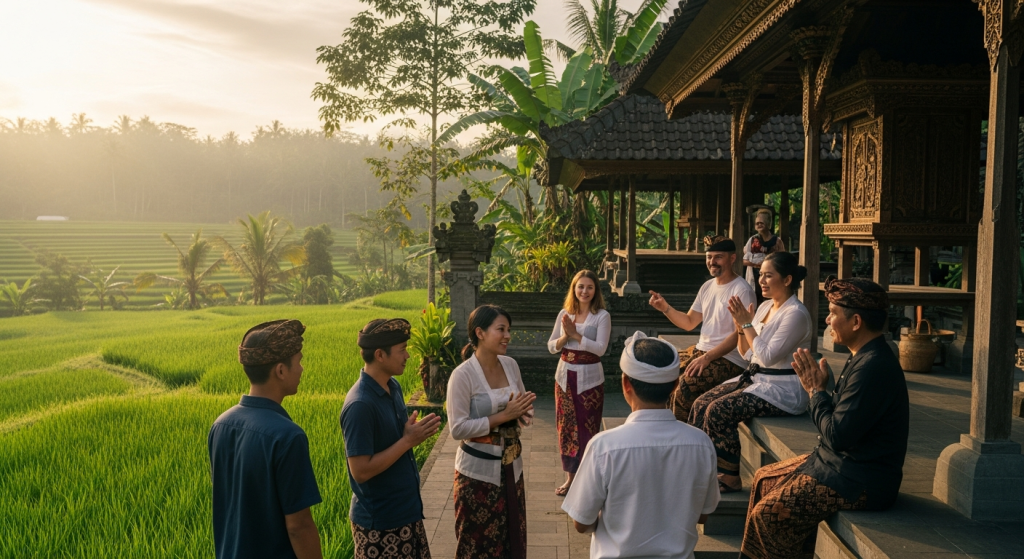
Bali Agrotourism connects travelers directly with the island’s agricultural heritage, offering authentic farm experiences across coffee plantations, rice terraces, and organic gardens. Established in 2010, the organization champions sustainable practices and community empowerment, ensuring fair trade and educational encounters with local farmers.
- Direct engagement with Balinese farmers in Sidemen, Tegalalang, and Kintamani.
- Focus on organic harvesting, traditional rice planting, and coffee processing.
- Committed to ethical tourism standards and local community support.
The morning mist lifts over the Kintamani highlands, carrying the scent of volcanic soil and ripening coffee cherries. Hands move with practiced rhythm, selecting only the reddest fruit. This is the pulse of Bali Agrotourism.
The Genesis of Bali Agrotourism: Cultivating an Idea
The vision for Bali Agrotourism takes root in 2010. Wayan Putra, a native Balinese with generations of farming heritage, observes the evolving landscape, seeing a disconnect between visitors and the agricultural bedrock of Balinese culture. His ambition crystallizes: create a direct bridge. Wayan, a former agronomist specializing in sustainable cultivation, dedicates himself to this endeavor. He spends months traversing the island, from the terraced slopes of Sidemen to the volcanic soils of Kintamani, forging relationships with local farming cooperatives. His efforts culminate in the establishment of
The Art of the Harvest: Curated Farm-to-Table Journeys
Imagine the gentle whisper of the wind through emerald rice paddies, the earthy scent of volcanic soil underfoot, and the vibrant hues of ripening fruit on the vine – these are the sensory invitations extended by Bali Agrotourism, transforming a simple farm visit into an immersive, luxurious journey. Beyond mere observation, these experiences are meticulously curated opportunities for travelers to connect deeply with the island’s agricultural heart, fostering an appreciation for the provenance of Balinese cuisine and the dedication of its farmers. Each interaction is designed not just to educate, but to inspire, offering a hands-on engagement that elevates understanding from theoretical to deeply personal.
The island’s rich volcanic soil, particularly in regions like Kintamani, lends itself to producing some of the world’s most aromatic coffee. Here, guests are invited to trace the journey of the revered Kintamani Arabica, which received its Geographical Indication status in 2008, from blossom to bean. This isn’t merely a tasting; it’s an educational traditional cultivation methods, from selective hand-picking of ripe cherries at elevations often between 1,000 and 1,700 meters above sea level, to the intricate wet-hulling process that gives Balinese coffee its distinct flavor profile. Participants learn the art of roasting, discern subtle tasting notes, and even experience the unique, if controversial, process behind Luwak coffee, all while understanding the ethical sourcing practices championed by Bali Agrotourism.
Beyond coffee, the iconic rice terraces of Tegalalang and the serene valleys of Sidemen offer a profound immersion into Bali’s staple crop. Travelers can engage directly with farmers, learning the ancient techniques of rice cultivation that have sustained the island for centuries. This includes traditional planting and harvesting, often guided by the principles of the Subak system – a democratic, self-governing water management cooperative that dates back to the 9th century and is recognized as a UNESCO World Heritage site. Complementing these experiences are visits to organic spice and herb gardens, where guests can forage for ingredients used in traditional Balinese cooking classes, transforming freshly picked produce into exquisite dishes under the guidance of local chefs, truly embracing the farm-to-table philosophy.
Beyond the Bean: Sustainable Impact and Community Enrichment
At the core of Bali Agrotourism’s ethos lies a profound commitment to sustainable impact and the holistic enrichment of local communities. This commitment transcends simple transactions, fostering a reciprocal relationship where visitors gain insights while directly contributing to the economic vitality and cultural preservation of the island’s agricultural heartlands. By ensuring fair trade principles are rigorously upheld, the organization guarantees that a significant portion of tourism revenue flows directly back to the farmers and their families, providing stable incomes that empower them to invest in their land, education, and future, thereby breaking cycles of economic vulnerability often faced by traditional agricultural communities.
Environmental stewardship forms another critical pillar of Bali Agrotourism’s mission. The focus on organic farming practices, eschewing synthetic pesticides and fertilizers, not only yields healthier produce but also safeguards Bali’s delicate ecosystems. Visitors learn about traditional composting methods, water conservation techniques crucial for rice cultivation in a tropical climate, and the importance of maintaining biodiversity within farm landscapes. This hands-on education highlights how sustainable agriculture acts as a guardian of Bali’s natural beauty, ensuring the island’s verdant landscapes and fertile soils remain vibrant for generations to come, aligning with the luxury traveler’s increasing desire for responsible and environmentally conscious experiences.
Furthermore, the initiative plays a vital role in the preservation of Bali’s rich cultural heritage. As modernity encroaches, traditional farming knowledge and practices risk being lost. Bali Agrotourism actively champions the continuation of these ancient methods, offering a platform for farmers to share their ancestral wisdom and skills with a global audience. Through direct engagement, travelers gain a deeper understanding of the spiritual connection Balinese people have with their land, their crops, and the intricate ceremonies that accompany planting and harvesting. This cultural exchange is invaluable, ensuring that the unique traditions, languages, and community structures that define Balinese agriculture are not only celebrated but also sustained and passed down to future generations, reinforcing the island’s unique identity.
Designing Your Bespoke Balinese Farm Experience
Integrating a Bali Agrotourism experience into a luxury itinerary transforms a standard vacation into a journey of profound connection and personalized discovery. For the discerning traveler, these farm encounters are not isolated events but seamless extensions of a broader, exquisitely tailored Balinese adventure. Imagine beginning your day with a private sunrise trek through the mist-shrouded rice terraces of Sidemen, culminating in a gourmet breakfast prepared with ingredients sourced directly from the fields you’ve just traversed. Such bespoke arrangements often include private, air-conditioned transfers, expert local guides fluent in English, and exclusive access to family-run farms, ensuring an intimate and uninterrupted experience that aligns perfectly with the standards of luxury travel.
The true luxury lies in the ability to customize every detail. Beyond the standard coffee or rice farm visits, Bali Agrotourism can facilitate unique, exclusive offerings. Picture a personalized culinary workshop held in a traditional Balinese kitchen, where you learn to prepare authentic dishes using herbs and spices you’ve hand-picked from an organic garden. Or perhaps a serene meditation session amidst the tranquility of an organic fruit orchard, followed by a tasting of exotic, freshly harvested produce. For those seeking deeper immersion, select boutique farm-stay lodges offer the opportunity to live within an agricultural community, enjoying the rhythm of rural life without sacrificing comfort or privacy, providing an authentic yet refined experience.
Planning your bespoke agrotourism journey is effortless, connecting you with local experts who understand the nuances of luxury travel and the authentic heart of Bali. Whether it’s arranging a private tour to a remote vanilla plantation in the central highlands, a visit to a traditional salt-making village on the east coast, or an exclusive session with an artisan who transforms natural fibers into traditional crafts, the possibilities are boundless. It’s recommended to plan these experiences with flexibility, allowing for spontaneous discoveries and deeper engagement, particularly during the shoulder seasons when the island’s beauty can be savored with greater serenity. This personalized approach ensures your Balinese agrotourism experience is not just a trip, but a curated masterpiece of cultural immersion and sustainable luxury. For more insights into Bali’s diverse regions, including the coffee-rich Kintamani area, visit Indonesia.Travel.